Monsoon Steel Care Guide: How to Store MS Products Safely
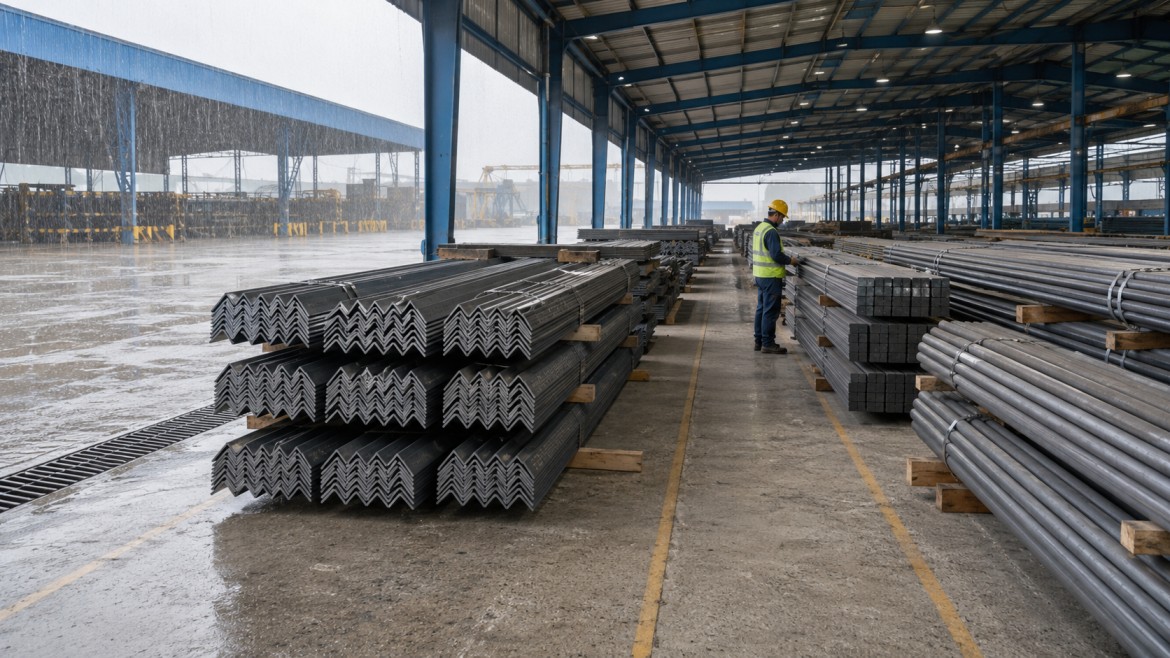


The monsoon season creates additional challenges for steel dealers, fabricators, contractors and construction businesses. Heavy rain, humidity, poor drainage and improper covering can expose mild-steel products to moisture. This may lead to surface rust, difficult material handling, identification problems and avoidable fabrication delays.
A good rainy-season storage plan should begin before the first heavy shower. Whether you stock MS flats, MS angles, MS squares or MS rounds, the following practical precautions can help you protect the material and keep your workshop, steel yard or project running smoothly.
Mild steel can develop surface oxidation when it remains exposed to water and oxygen. Monsoon conditions increase this exposure, especially when rainwater becomes trapped between bundled sections or when steel is stored directly on wet ground.
Moisture can also damage bundle labels, make material slippery to handle and cause different sizes to become mixed. Proper storage is therefore not only about appearance. It supports safer handling, better stock control and uninterrupted fabrication.
1. Store Steel in a Covered and Ventilated Area
Keep steel products under a permanent roof or a properly secured waterproof cover. The storage area should also have enough ventilation to prevent humid air and condensation from remaining trapped around the material.
Avoid storing steel close to open shed edges where wind-driven rain can reach the bundles. If only temporary covering is available, extend it beyond the complete stack while keeping enough space for airflow.
2. Keep Every Bundle Raised Above the Ground
Never place MS flats, angles, squares or rounds directly on soil, mud or a wet concrete floor. Raise each bundle on strong, level dunnage or suitable storage racks.
The supports should be positioned evenly so that long steel sections do not bend or become unstable. Raising the material also creates inspection space and prevents small amounts of rainwater from reaching the bottom layer.
3. Do Not Seal Wet Steel Under a Tarpaulin
A tarpaulin can protect steel from direct rain, but it can also trap moisture if it is wrapped tightly around material that is already wet. Before covering a wet bundle, allow drainage and drying wherever possible.
Use a sloping cover so rainwater runs away instead of collecting on top. Secure it against strong wind, but leave controlled ventilation around the sides. Inspect the cover after every period of heavy rainfall.
4. Maintain Proper Drainage Around the Storage Area
Rainwater should flow away from the steel-storage zone. Clean blocked drains before the monsoon and check the yard for low areas where water collects.
Keep loading and inspection aisles clear. Standing water near stored steel increases moisture exposure and can create slipping or vehicle-movement hazards for workers.
5. Separate Products and Sizes Clearly
Store MS flats, angles, squares and rounds in separate, clearly marked sections. Different dimensions should not be mixed in one stack. Replace paper labels with weather-resistant identification wherever practical.
Clear identification reduces selection errors and prevents workers from repeatedly opening or moving several bundles to find the required size. It also helps dealers and fabricators maintain accurate stock records during busy periods.
6. Follow Product-Specific Storage Precautions
Moisture can remain between closely packed flat surfaces. Keep bundles aligned and use suitable separators when required so water does not remain trapped for long periods.
The L-shaped profile of an MS angle can collect water if the section is stored in the wrong orientation. Arrange bundles so water can drain instead of remaining inside the angle.
Square and round bars should be placed on stable supports and secured against movement. Round bars require particular care because they can roll when restraints are removed, especially on wet or uneven surfaces.
7. Inspect Steel Immediately After Delivery
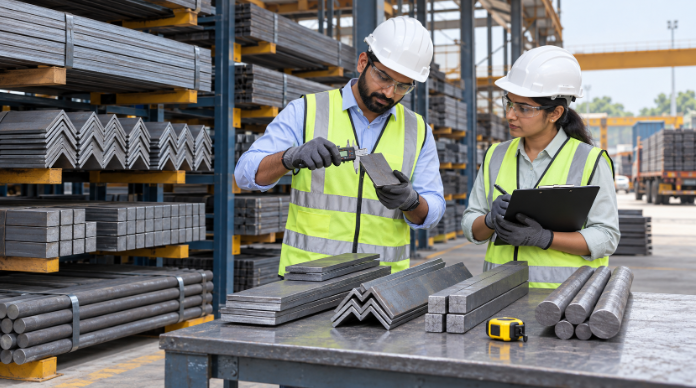
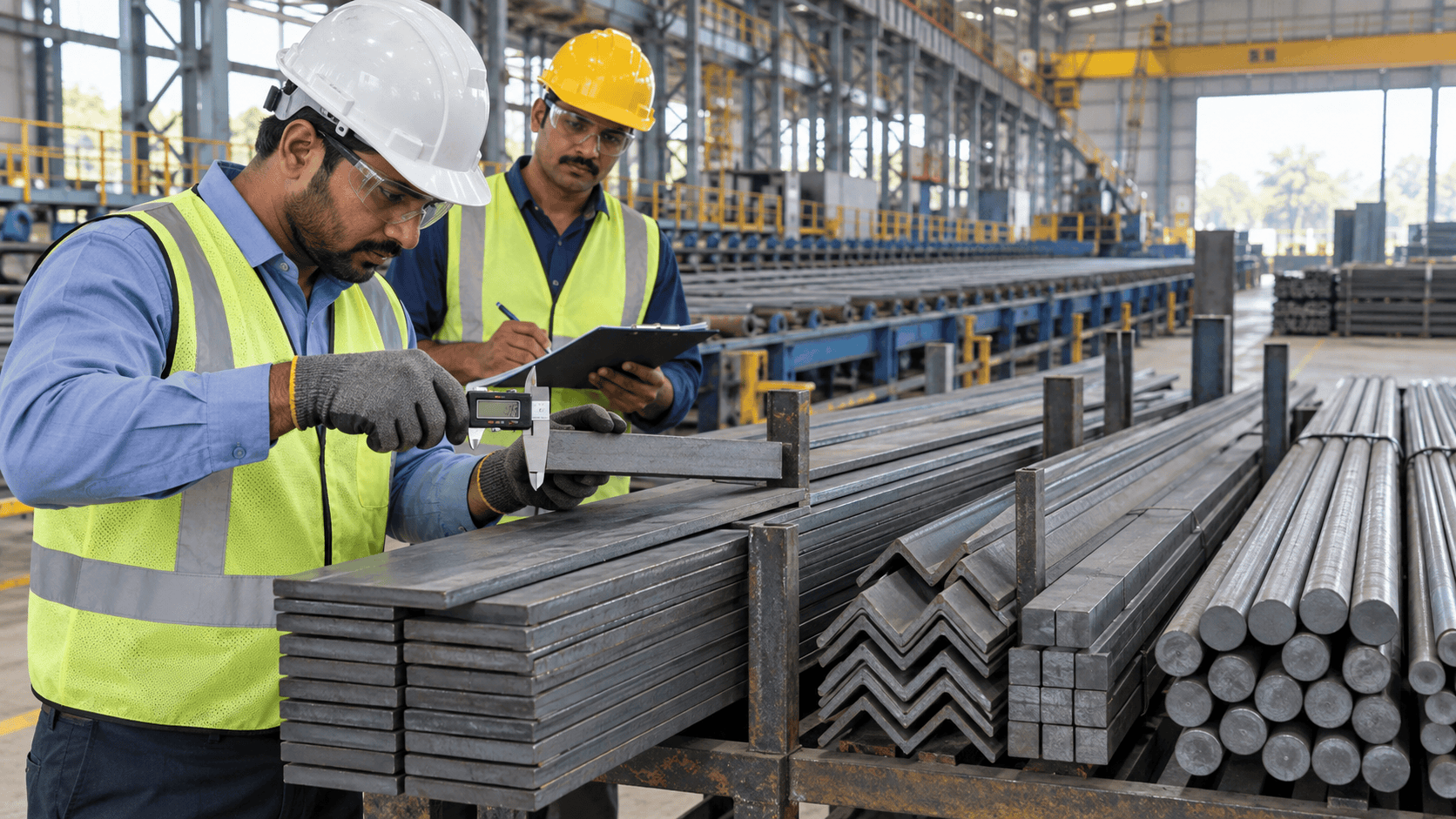
Check every delivery for wet packaging, damaged bundle ties, missing identification and visible surface changes. If material arrives during rain, move it to the covered storage area without unnecessary delay.
Record the product, size, quantity, batch details and condition at the time of receipt. Early inspection makes it easier to separate affected material and resolve any question before fabrication begins.
8. Keep Steel Away from Mud, Salts and Chemicals
Do not store structural steel near fertilizers, salts, acids or other chemicals. Contaminated water and chemical residue can create more serious surface problems than clean rainwater.
Workers should also avoid dragging steel through mud. Apart from contaminating the surface, dragging can damage edges and create unsafe manual-handling conditions.
9. Use First-In, First-Out Stock Rotation
Follow a first-in, first-out system so older stock is used before newer deliveries. During monsoon, record inspection dates and check long-stored bundles more frequently.
Good stock rotation reduces the time material remains in the yard and makes it easier to identify slow-moving sizes that require additional attention.
10. Take Extra Care During Lifting and Unloading
Wet steel and wet floors increase handling risk. Use suitable lifting equipment, inspected slings and trained operators. Workers should wear the required personal protective equipment, including safety footwear and gloves suitable for the task.
Never stand beneath suspended material. Keep people away from the unloading zone, use stable supports and stop work if heavy rain, poor visibility or lightning makes the activity unsafe.
Do not judge structural suitability only by colour or appearance. Separate the affected material and have a competent person inspect it. The required cleaning and surface preparation will depend on the product, the extent of corrosion, the fabrication process, the coating system and the project specification.
If there is deep pitting, scaling, deformation or suspected loss of section, obtain technical guidance before cutting, welding, painting or using the material. Project specifications and engineering requirements should always take priority over general advice.
Correct storage protects your inventory, but the process begins with consistent material and clear product identification. HEBE Steels manufactures light structural long products for fabrication, construction and industrial applications. Its production facilities include batch-wise stacking, material-handling systems, computerized weighbridges and in-house testing capabilities.
Explore HEBE Steels’ manufacturing facilities and quality approach to learn more.
Monsoon does not have to bring steel wastage or fabrication delays. A covered and ventilated storage area, raised bundles, effective drainage, proper labelling, regular inspection and safe material handling can reduce many common rainy-season problems.
Looking for MS flats, angles, squares or rounds for your next fabrication or construction requirement? Contact HEBE Steels for product availability, quality documentation and dispatch support.
©2025-26, Hebe Steels Private Limited. All Rights Reserved.