How to Reduce Material Waste During Steel Fabrication
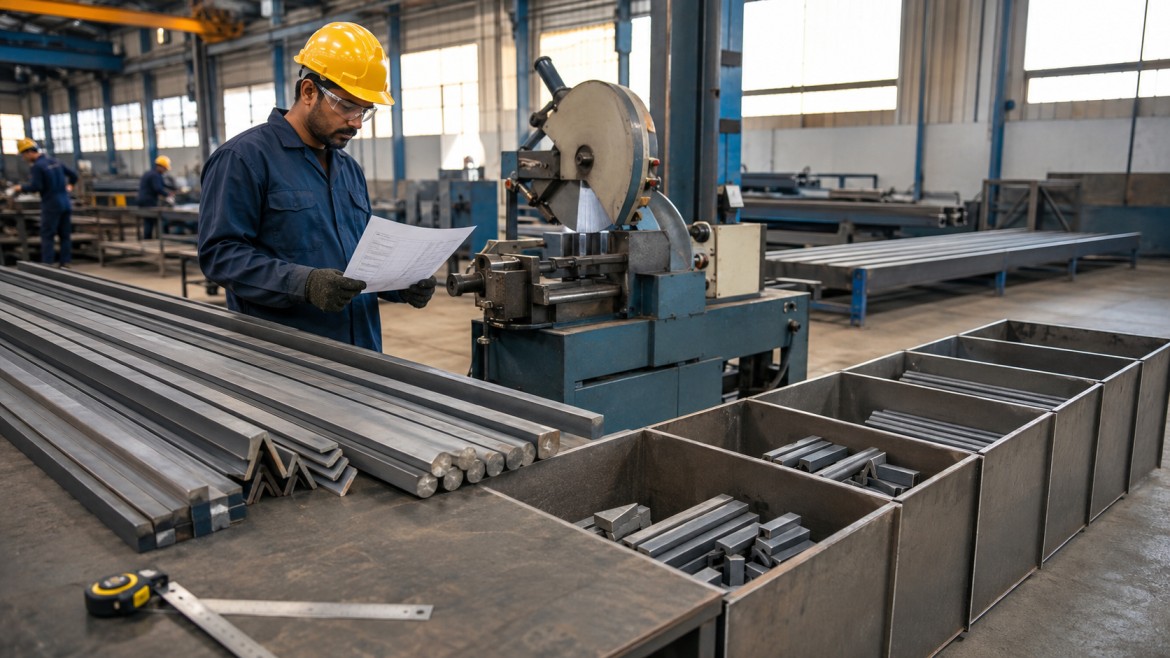


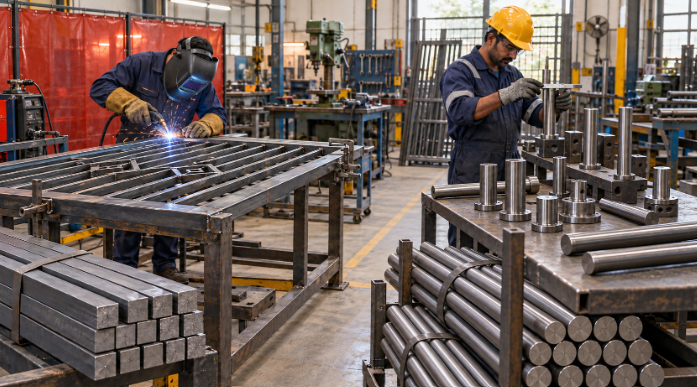
Material waste is one of the easiest costs to overlook in a steel fabrication workshop. A few unused lengths, incorrect cuts or rejected components may appear small on an individual job, but repeated losses can reduce margins, delay delivery and create unnecessary handling and storage work.
Reducing waste does not mean using questionable material or compromising a drawing. It means planning each job carefully, selecting the correct mild-steel section, making accurate cuts, preventing avoidable rework and keeping usable offcuts available for suitable future work.
Whether a workshop fabricates gates, grills, railings, sheds, frames, supports or general engineering components, the following practices can help improve material utilization without sacrificing quality or safety.
What Counts as Material Waste in Steel Fabrication?
Steel waste is not limited to scrap collected near a cutting machine. It can also include excess stock purchased for a job, short offcuts that cannot be reused, rejected parts, damaged sections, incorrect holes, poor welds and components that must be remade because dimensions do not match.
Some offcut is unavoidable because cutting processes remove material and standard stock lengths rarely match every finished component exactly. The practical goal is to separate necessary process loss from preventable waste and then reduce the preventable portion.
1.Start Every Job with a Clear Bill of Materials
Prepare a bill of materials before taking steel from storage. It should identify the required product, section size, finished length, quantity and applicable drawing or job reference.
Confirm the latest approved drawing before cutting begins. A revision received after fabrication has started can turn correctly made components into waste. Where dimensions or specifications are unclear, resolve them with the responsible designer, engineer or customer instead of making an assumption.
2. Prepare an Optimized Cutting List
A cutting list converts the bill of materials into a practical sequence for full stock lengths. Group required pieces by product and size, then arrange the cuts so the combination of finished lengths leaves the smallest useful remainder.
Do not simply cut components in the order in which they appear on a drawing. Compare several combinations first. Even a basic spreadsheet can help smaller workshops test different cutting arrangements, while nesting or production-planning software may be useful for higher-volume operations.
The plan must include saw kerf, trimming allowance and any end preparation required by the approved fabrication process. Ignoring the material removed by each cut can cause the final piece to be short.
3. Check Stock Before Issuing New Material
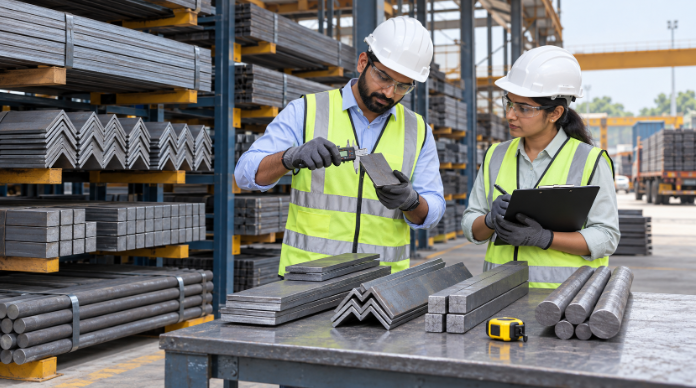
Before opening a new bundle or taking another full length, check whether an identified offcut can safely meet the requirement. Maintain a simple offcut register that records the section, size, remaining length, condition and storage location.
Only reuse material when its identity and suitability are clear. An unmarked or damaged piece should not be substituted into a structural or customer-specified job merely to reduce scrap. Project drawings, material specifications and traceability requirements take priority.
4. Select the Correct Steel Section for the Application
Using an unnecessarily large or heavy section increases cost and may create additional cutting, welding and handling work. Using an undersized section can lead to rejection or unsafe performance.
Select MS flats, MS angles, squares or rounds according to the approved design and intended application. Fabricators should never reduce a specified size or change a grade without authorization from the responsible technical authority.
5. Verify the Material and Dimensions Before Cutting
Check the product type, section size, length, condition and identification before it reaches the cutting station. Keep different sizes and batches separated so a similar-looking section is not selected by mistake.
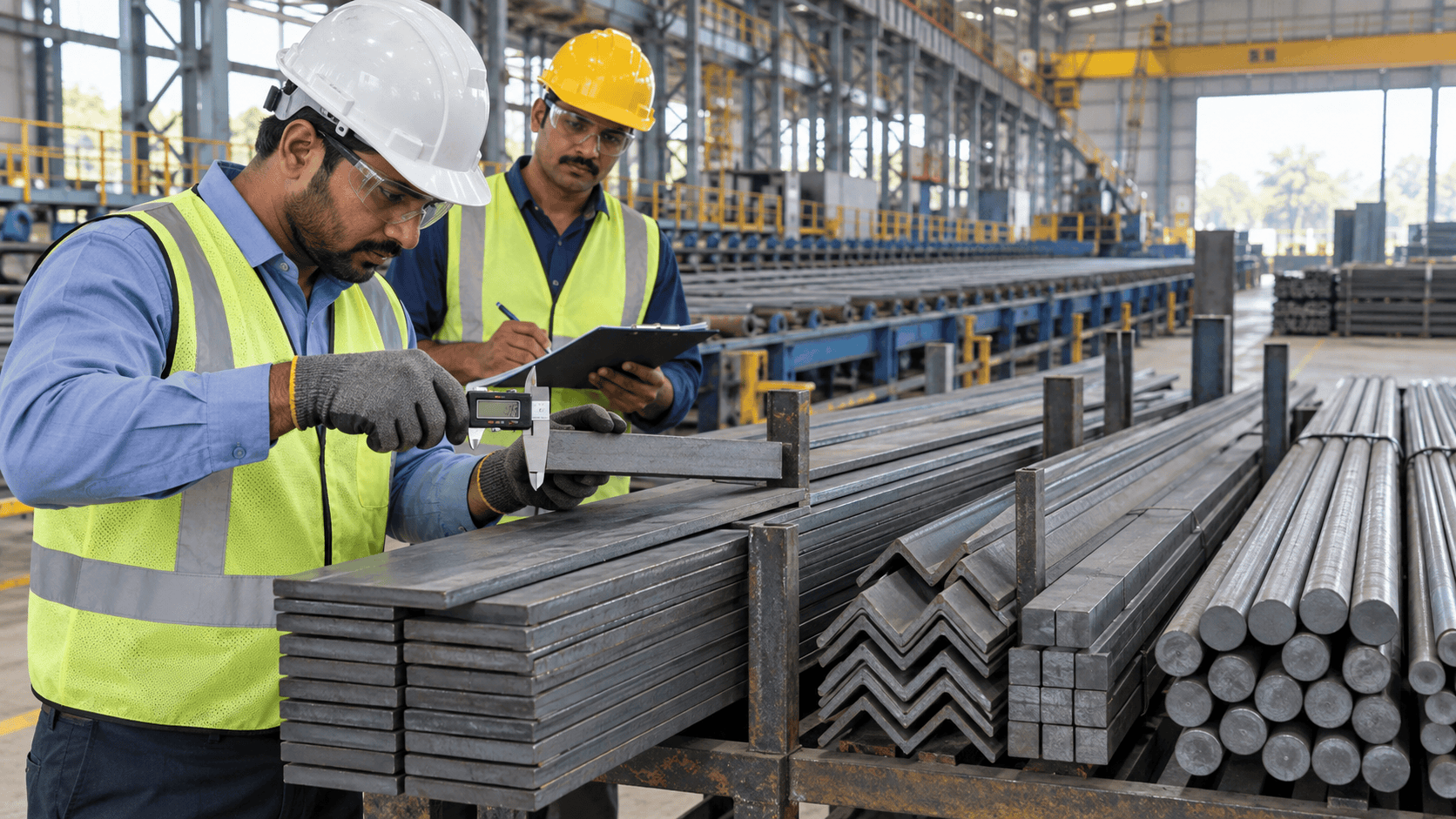
Measure from a clean reference end and use calibrated measuring equipment. Mark cut lines clearly and verify critical dimensions before operating the machine. For repeated components, a suitable stop, jig or template can improve consistency and reduce repeated marking errors.
6. Use First-Piece Inspection for Repeated Parts
When several identical components are required, cut and inspect the first piece before producing the complete batch. Check length, angle, hole position, edge condition and fit against the drawing or approved template.
A first-piece check can prevent one setup error from being repeated across many parts. Record the accepted setting where the workshop regularly produces the same component.
7. Maintain Cutting, Drilling and Welding Equipment
Worn blades, incorrect machine settings, loose guides and poorly maintained tools can produce angled cuts, excessive kerf, rough edges or inaccurate holes. These defects may require extra grinding or complete remanufacture.
Follow the equipment manufacturer's maintenance schedule, inspect consumables and confirm that guards and work-holding devices are functioning correctly. Operators should be trained for the machine and process they use. Maintenance and safety controls should never be bypassed to save material or time.
8. Plan Holes, Joints and Welds Before Assembly
Many rejected assemblies begin with a missed hole, an incorrect orientation or uncontrolled distortion rather than a bad raw-material cut. Mark matching components consistently and dry-fit critical assemblies before final welding.
Use appropriate jigs and a planned welding sequence where suitable. Control heat input and distortion according to the approved welding procedure. If a weld or component does not meet the applicable requirement, have it assessed by a competent person rather than concealing or improvising a repair.
9. Store Full Lengths and Offcuts Properly
Steel that bends, becomes heavily corroded, loses identification or is damaged during handling may no longer be usable for the intended job. Store full lengths on stable supports and keep products separated by shape and size.
Create dedicated racks or bins for reusable offcuts. Mark each piece with its section, size and remaining length using a method suitable for the workshop. Arrange stock so older or shorter suitable pieces are visible and can be considered before new material is issued.
10. Combine Similar Jobs Where Practical
If several orders use the same section and size, planning them together can produce better cutting combinations. A remainder that is unusable for one order may be suitable for a component in another.
Combined planning must still preserve order identification, batch control and customer specifications. Do not mix materials when traceability, grade or project requirements require separation.
11. Prevent Handling and Transportation Damage
Material can be wasted before fabrication begins if bundles are dropped, dragged or supported unevenly. Use suitable lifting equipment, stable dunnage and trained operators. Secure long sections during internal movement and transport.
Keep aisles clear and avoid contact with mud, salts or aggressive chemicals. Protect stock from prolonged rain exposure and trapped moisture. Better handling preserves straightness, surface condition and identification while also improving workplace safety.
12. Measure Waste Instead of Guessing
Record the quantity of material issued, incorporated into finished work, retained as reusable offcut, sent for approved rework and classified as scrap. Review the causes of significant losses by product, job and process.
Useful workshop indicators can include material yield, scrap percentage, rework quantity, rejected-part count and offcut reuse. The exact method should remain consistent from one reporting period to the next so the team can see whether improvement actions are working.
Quick Waste-Reduction Checklist
How Consistent Steel Supports Efficient Fabrication
Good workshop planning is most effective when the incoming material is clearly identified and dimensionally consistent. Consistency helps fabricators prepare repeatable cutting plans, use jigs effectively and reduce avoidable fitting and rework.
HEBE Steels manufactures mild-steel long products for fabrication, construction and industrial applications. The company's quality positioning emphasizes batch inspection, dimensional accuracy and uniformity, supported by in-house chemical and physical testing and mechanized material handling. Learn more about HEBE's quality approach and manufacturing facilities.
Conclusion
Reducing steel waste requires control at every stage: material selection, cutting-plan preparation, measurement, machine setup, assembly, storage and review. The strongest results usually come from simple habits followed consistently, not from one isolated change.
Looking for MS flats, angles, squares or rounds for fabrication, construction or general engineering work? Contact HEBE Steels for product availability, quality documentation and dispatch support.
©2025-26, Hebe Steels Private Limited. All Rights Reserved.